How can Central Asia strengthen cooperation on water and climate in a rapidly changing region?
This question was at the heart of the Regional Environmental Summit 2026, where the Blue Peace Central Asia (BPCA) initiative brought together governments, researchers, universities, and development partners to explore practical solutions for the region’s shared water challenges.
Held in Astana from 22–24 April, the Summit provided a strategic platform for advancing regional dialogue on climate resilience, sustainable financing, water diplomacy, and institutional partnerships.
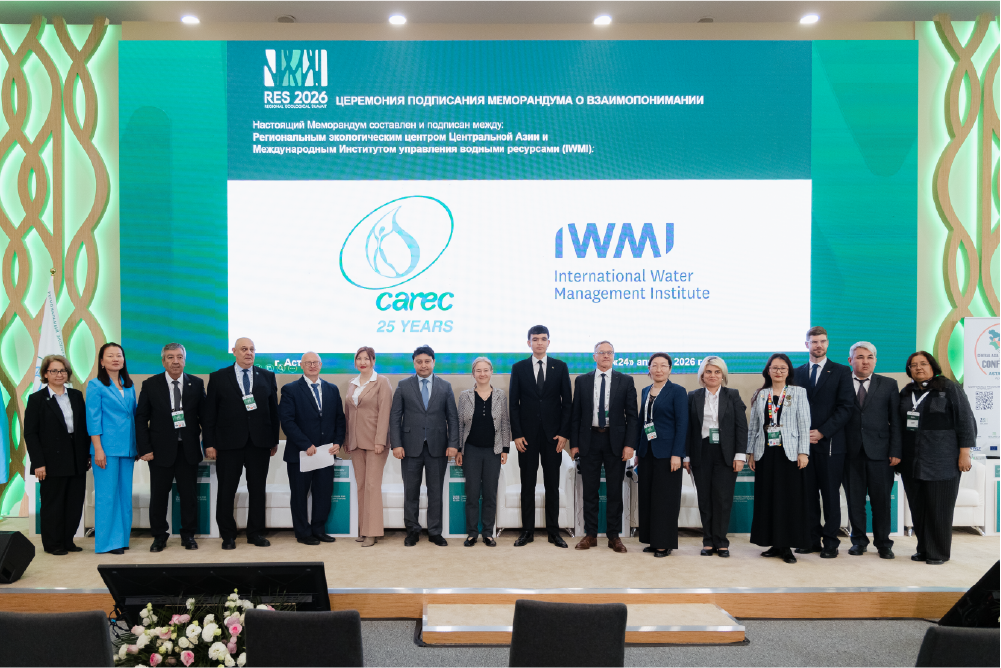
Implemented by the International Water Management Institute in partnership with International Union for Conservation of Nature and Regional Environmental Centre for Central Asia, and funded by the Swiss Agency for Development and Cooperation, BPCA contributed to seven Summit sessions, organized two dedicated events, and supported three Memoranda of Cooperation.
Investing in the Next Generation of Water Diplomacy
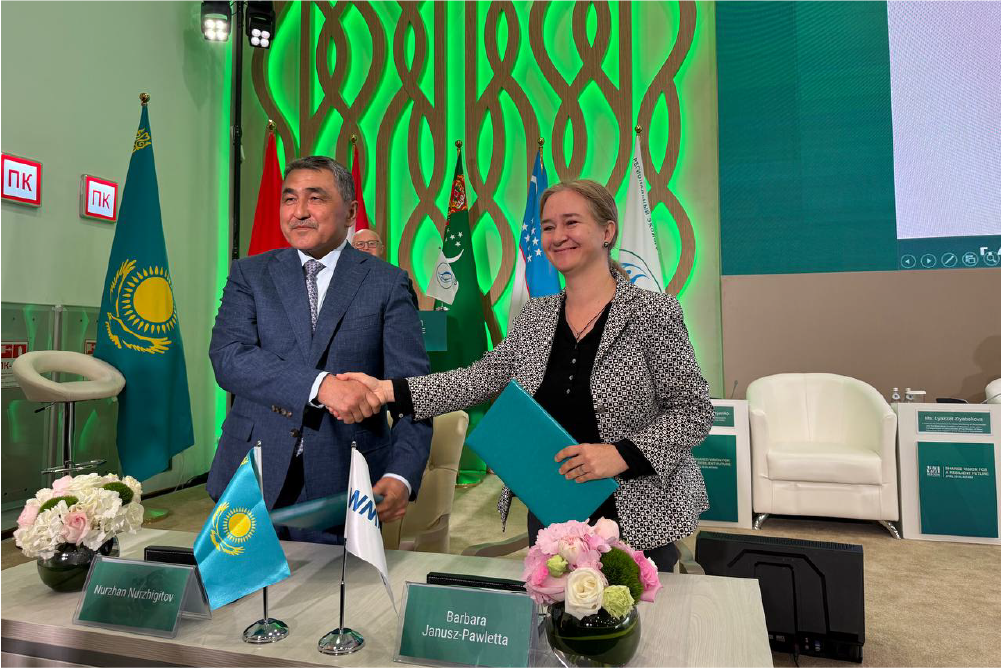
A major highlight of the Summit was the signing of a Memorandum of Cooperation between Al-Farabi Kazakh National University, Kazakh National University of Water Management and Irrigation, and IWMI to jointly develop a Master’s Programme in Water Diplomacy.
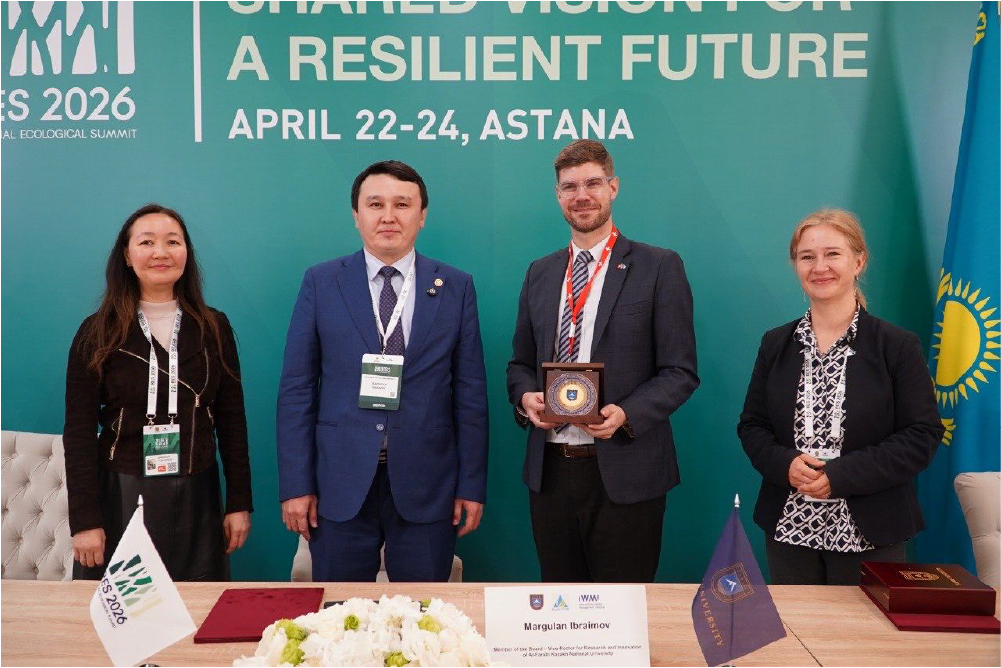
The initiative reflects a growing recognition that regional water challenges require not only infrastructure and policy reform, but also long-term investments in people and institutions.
This agreement builds on earlier partnerships established in Uzbekistan in 2025 and contributes to BPCA’s broader effort to institutionalize water diplomacy education across Central Asia.
Exploring Practical Solutions for Shared Challenges
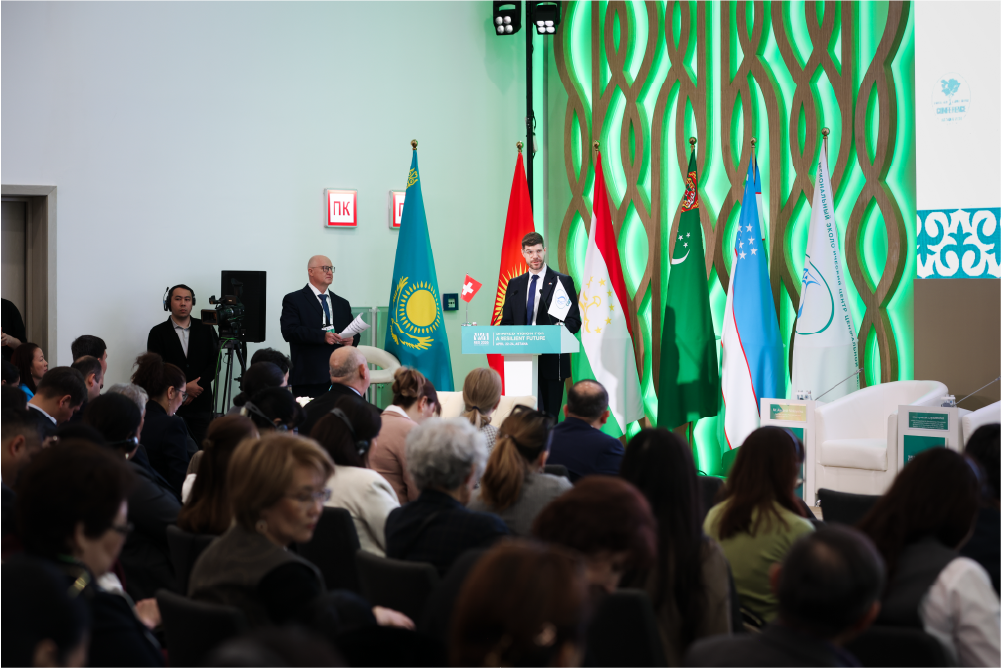
Throughout the Summit, BPCA contributed to discussions on nature-based solutions, sustainable financing, climate technology, drought preparedness, and regional cooperation.
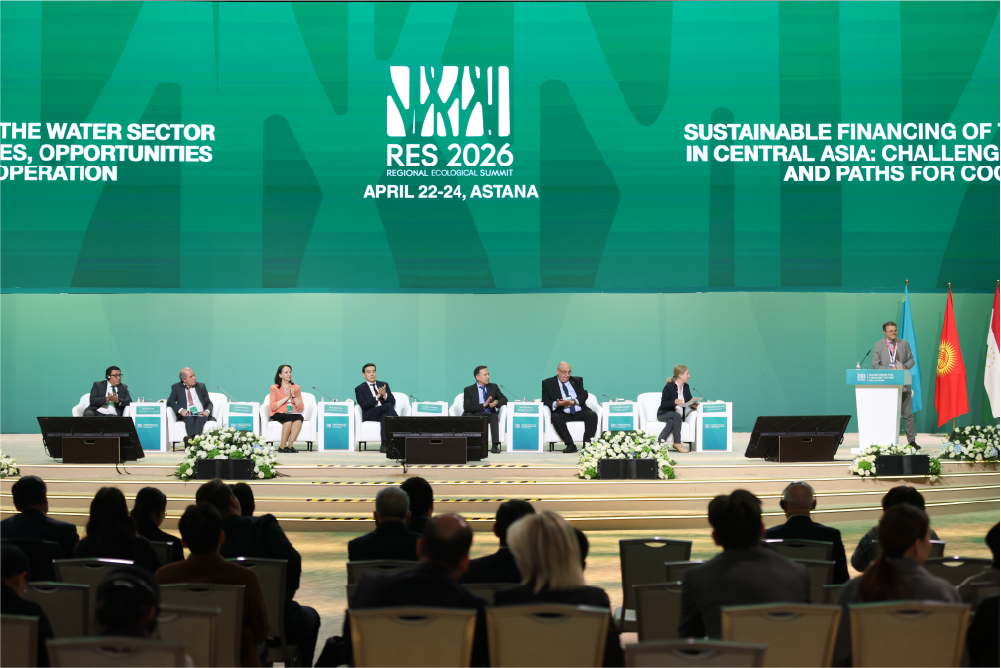
A dedicated session on Sustainable Financing of the Water Sector in Central Asia highlighted one of the region’s most pressing gaps: while investment often focuses on conventional infrastructure, climate finance, environmental funds, and blended financing mechanisms remain underused.
Participants discussed how stronger coordination between water, finance, and environmental sectors can unlock more resilient and sustainable investment pathways.
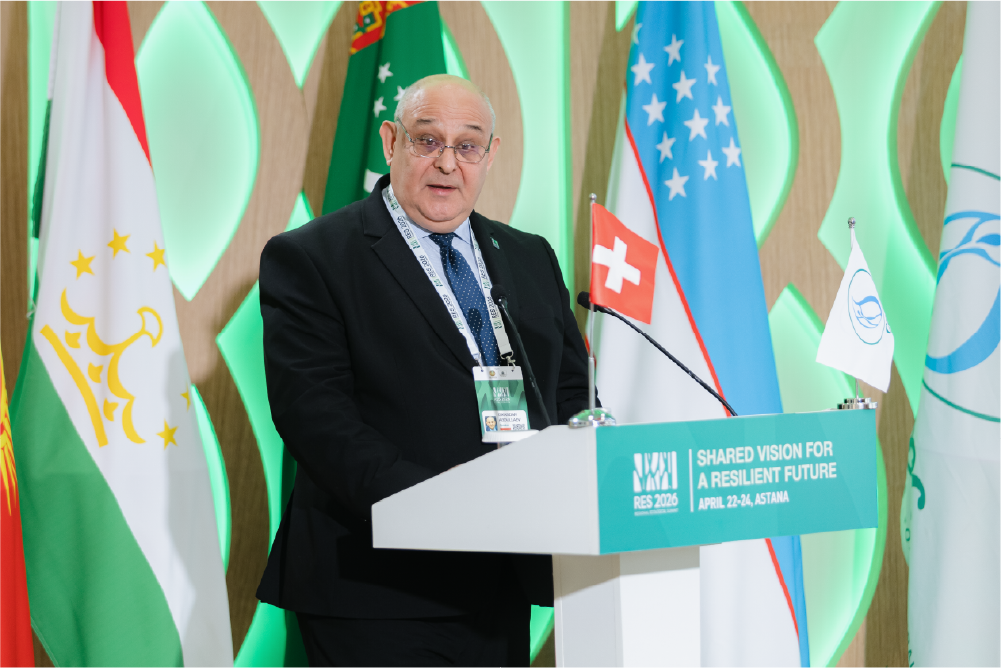
At the Swiss Pavilion, discussions further explored opportunities to strengthen cooperation between Switzerland and Central Asian partners through environmental innovation, technical expertise, and investment partnerships.
A Regional Vision for Water and Climate
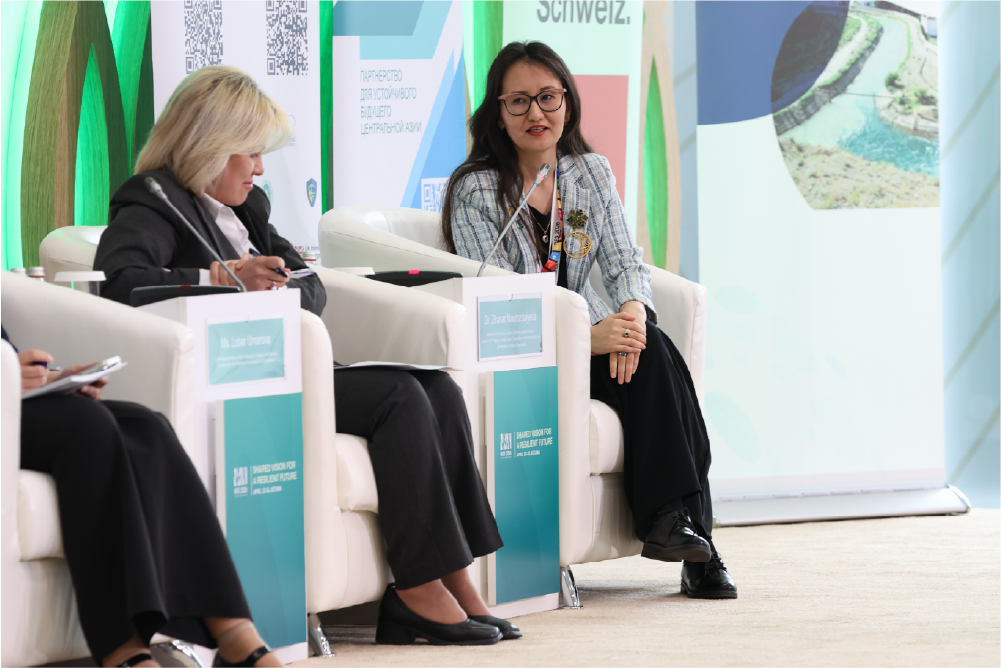
On 24 April, BPCA organized its flagship session on Climate-Sensitive Water Resource Management, bringing together representatives from governments, regional institutions, research organizations, and development partners.
A key outcome was the presentation of the Regional Vision on Water Resources and Climate in Central Asia.
The analysis highlighted three converging risks shaping the future of the region:
• accelerating climate change;
• glacier degradation;
• increasing water stress.
These challenges are deeply interconnected and transcend national borders.
As emphasized during the session:
“No country can address these risks independently. Regional cooperation is no longer an option, but a necessity.”
The Regional Vision outlines five strategic priorities for coordinated action, including climate-resilient water monitoring systems, regional early warning mechanisms, climate services, harmonized water quality monitoring, and joint water-agriculture solutions.
Bridging Science and Policy
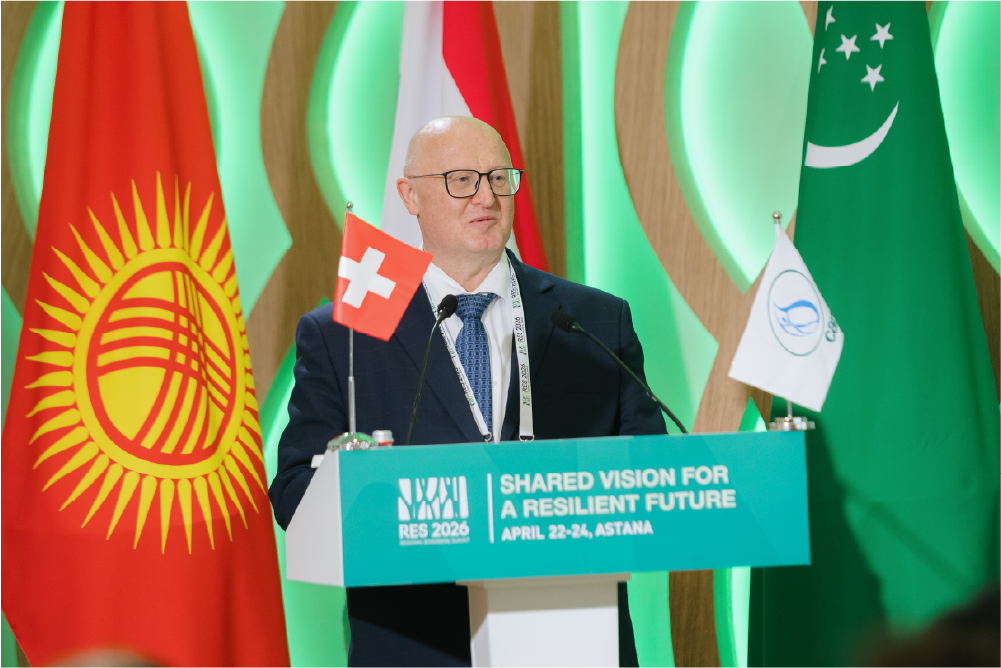
Another important proposal introduced during the Summit was the establishment of a Community of Practice on Water Resources and Climate Change Adaptation.
The platform is designed to strengthen collaboration between scientists, policymakers, and practitioners by validating evidence, supporting regional learning, and translating knowledge into informed decision-making.
This mechanism aims to bridge a common gap in the region: strong analysis often exists, but implementation requires stronger links between science, institutions, and policy processes.
Moving Beyond Agreements
Across all sessions, one message consistently emerged: Central Asia does not lack dialogue or frameworks — the priority now is implementation.
Regional cooperation must increasingly focus on practical tools, financing mechanisms, institutional coordination, and scalable solutions that can generate measurable impact.
BPCA’s contribution at the Summit demonstrated how water can serve not only as a shared challenge, but also as a platform for trust, cooperation, and regional resilience.
With growing climate pressures, water stress, and environmental risks, the path forward will require stronger partnerships, long-term vision, and collective action.
From Astana, the direction is clear: the future of water security in Central Asia depends on turning regional dialogue into regional action.