Strengthening Transboundary Water Cooperation: IWMI Enhances Water Monitoring Capacities in Central Asia River Basin
Reliable water measurement and effective information exchange are essential for managing shared water resources, particularly in transboundary river basins. In the Isfara River Basin, shared by Tajikistan, Kyrgyzstan, and Uzbekistan, outdated monitoring equipment, limited technical capacities, and differences in national water management systems present challenges for accurate water accounting and coordinated water management. Addressing these challenges requires improved monitoring tools, stronger institutional capacities, and practical cooperation among water management organizations across borders.
To support these efforts, the International Water Management Institute conducted its third mission to the Isfara River Basin from 22 to 28 September 2026 under Component 2 of the Blue Peace Central Asia (BPCA 2.0) programme, funded by the Swiss Agency for Development and Cooperation (SDC).
The mission focused on strengthening the technical capacities of local water management organizations through the provision of modern water measurement equipment and supporting practical cooperation across the three countries.
Supporting Water Management Organizations Across Borders
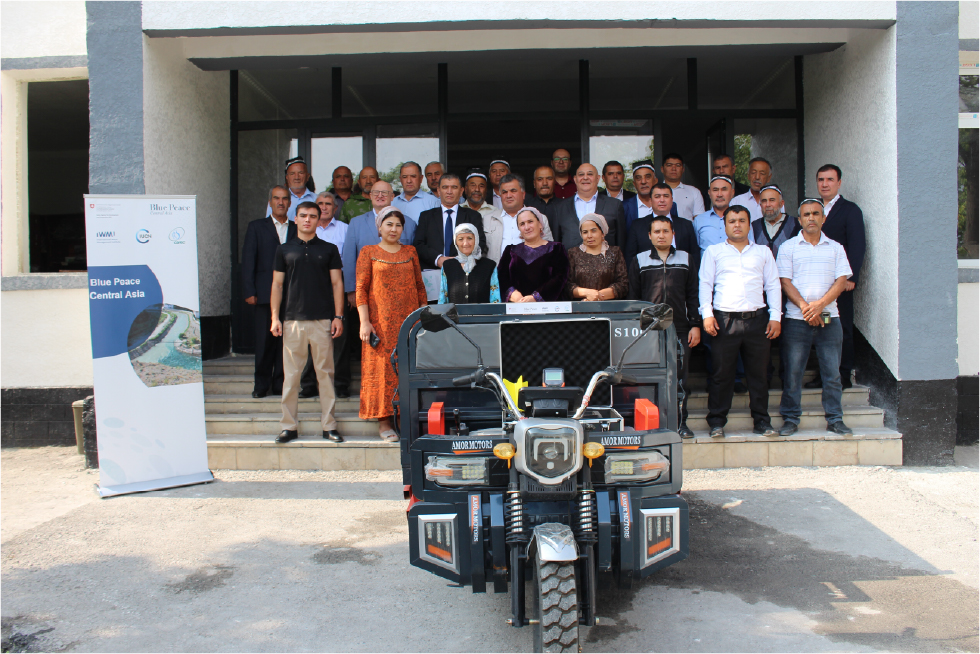
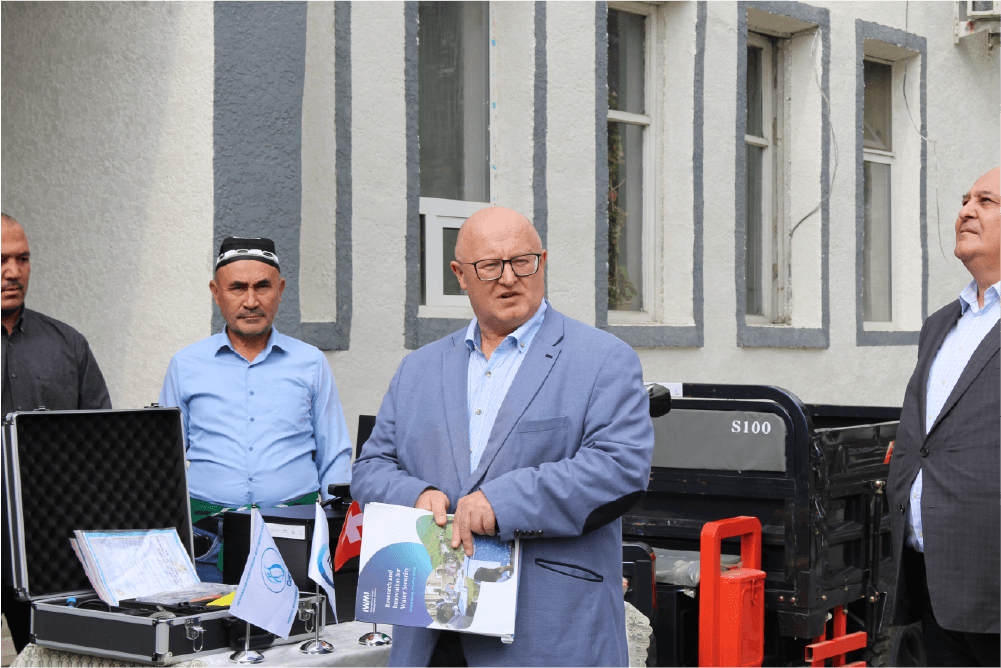
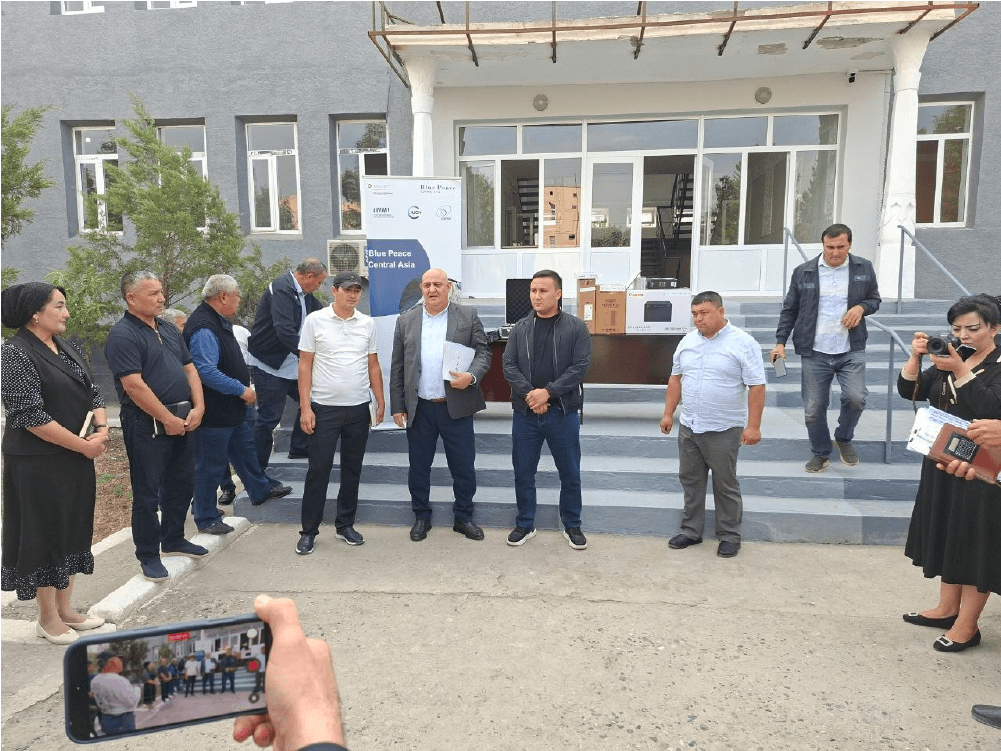
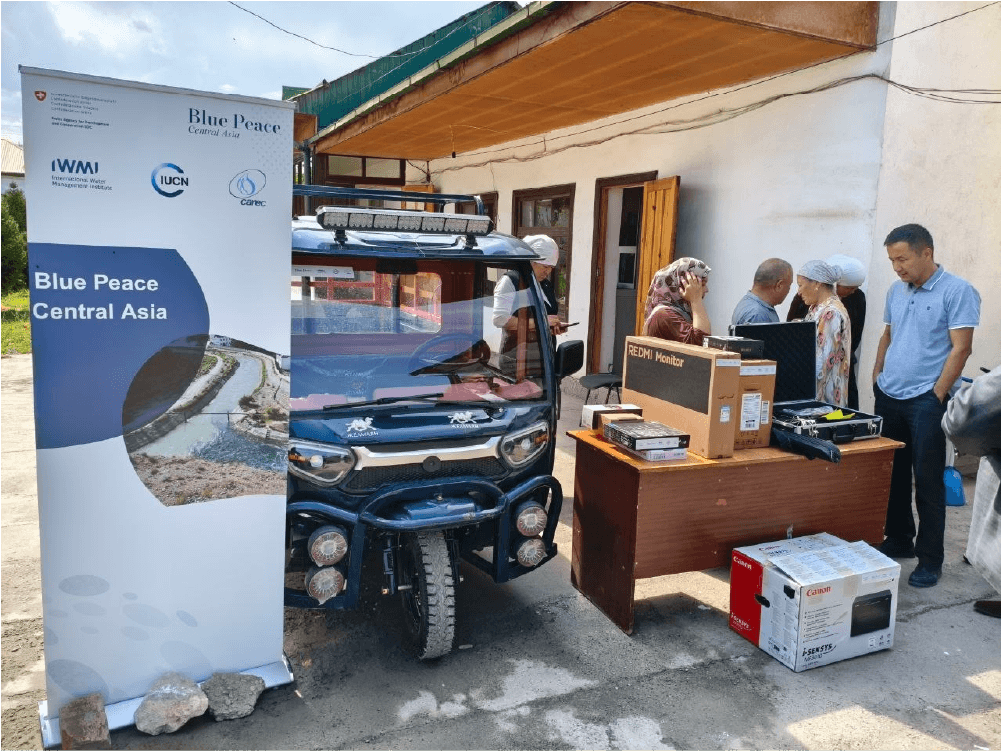
During the mission, IWMI officially handed over equipment to three water management organizations: the State Directorate for Land Reclamation and Irrigation in Isfara, Tajikistan (24 September); the Batken District Water Management Department in Kyrgyzstan (25 September); and the Beshariq District Water Supply Service in Uzbekistan (28 September).
Each organization received a portable electromagnetic flow meter, an electric field vehicle, a desktop computer set, and a printer to support water measurement, field monitoring, data recording, and reporting.
The portable flow meters will enable specialists to measure water discharge at multiple monitoring locations, including canals and hydrological observation points. The field vehicles will facilitate access to monitoring sites, while the computer equipment will support more systematic data management and reporting.
The official handover ceremonies brought together representatives of local authorities, water management institutions, water user associations, and local communities. The participating organizations formally accepted the equipment and designated responsible staff for its management and use.
From Technical Support to Basin-Wide Cooperation
The provision of equipment represents an important step towards addressing existing gaps in water monitoring across the Isfara River Basin. Water measurements in parts of the basin have traditionally relied on older instruments and outdated measurement tables, highlighting the need for more reliable and comparable hydrological data.
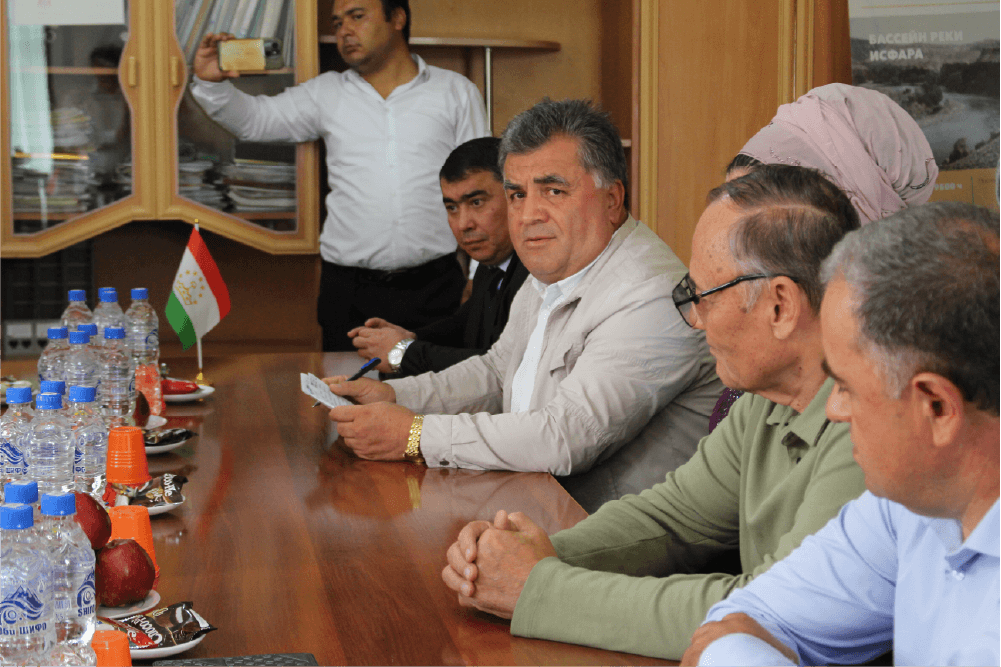
Although the three water management organizations operate under different national regulatory frameworks, they share responsibility for managing water resources within the same river basin. Strengthening their ability to collect consistent water data can provide a foundation for improved information exchange, more informed water allocation decisions, and coordinated planning.
The September mission builds on two earlier activities implemented in 2026. The first mission, conducted in July, focused on assessing the basin and identifying priority needs, while the second mission, in August, supported the training of social mobilizers in community-based monitoring of water resources and water management infrastructure.
Together, these activities reflect a gradual transition from initial assessment and stakeholder engagement towards practical technical support and basin-wide planning.
Building Capacities and Strengthening Future Cooperation
Following the equipment handover, IWMI will support practical hydrometry training for water management specialists in Isfara, Batken, and Beshariq during October and November 2026. The training will focus on the use of the newly provided flow meters, accurate water discharge measurements, and comparison of results with existing monitoring instruments.
Community-based monitoring activities will also continue through the engagement of social mobilizers, helping strengthen local participation in water management.
A joint technical meeting of the three water management organizations is planned for 9 December 2026 in Batken, Kyrgyzstan. The meeting will focus on developing a practical cooperation platform, establishing arrangements for data exchange, discussing joint inspections of water infrastructure near national borders, and identifying priority actions for basin planning in 2027.
These efforts will contribute to the programme's longer-term objectives of strengthening basin planning, supporting investment planning, and promoting cooperation among water management institutions in the region.
The activities are implemented under Blue Peace Central Asia (BPCA 2.0), funded by the Swiss Agency for Development and Cooperation (SDC) and implemented by IWMI in partnership with the International Union for Conservation of Nature (IUCN) and the Regional Environmental Centre for Central Asia (CAREC).
By combining modern monitoring equipment, technical capacity development, community engagement, and institutional cooperation, the programme aims to support more transparent, evidence-based, and sustainable management of shared water resources in the Isfara River Basin.